
Participants
Take the diagnostic: sections, pacing, saving and resuming
How the diagnostic is structured, how long to allow, and how to stop and come back without losing anything.
The shape of the instrument
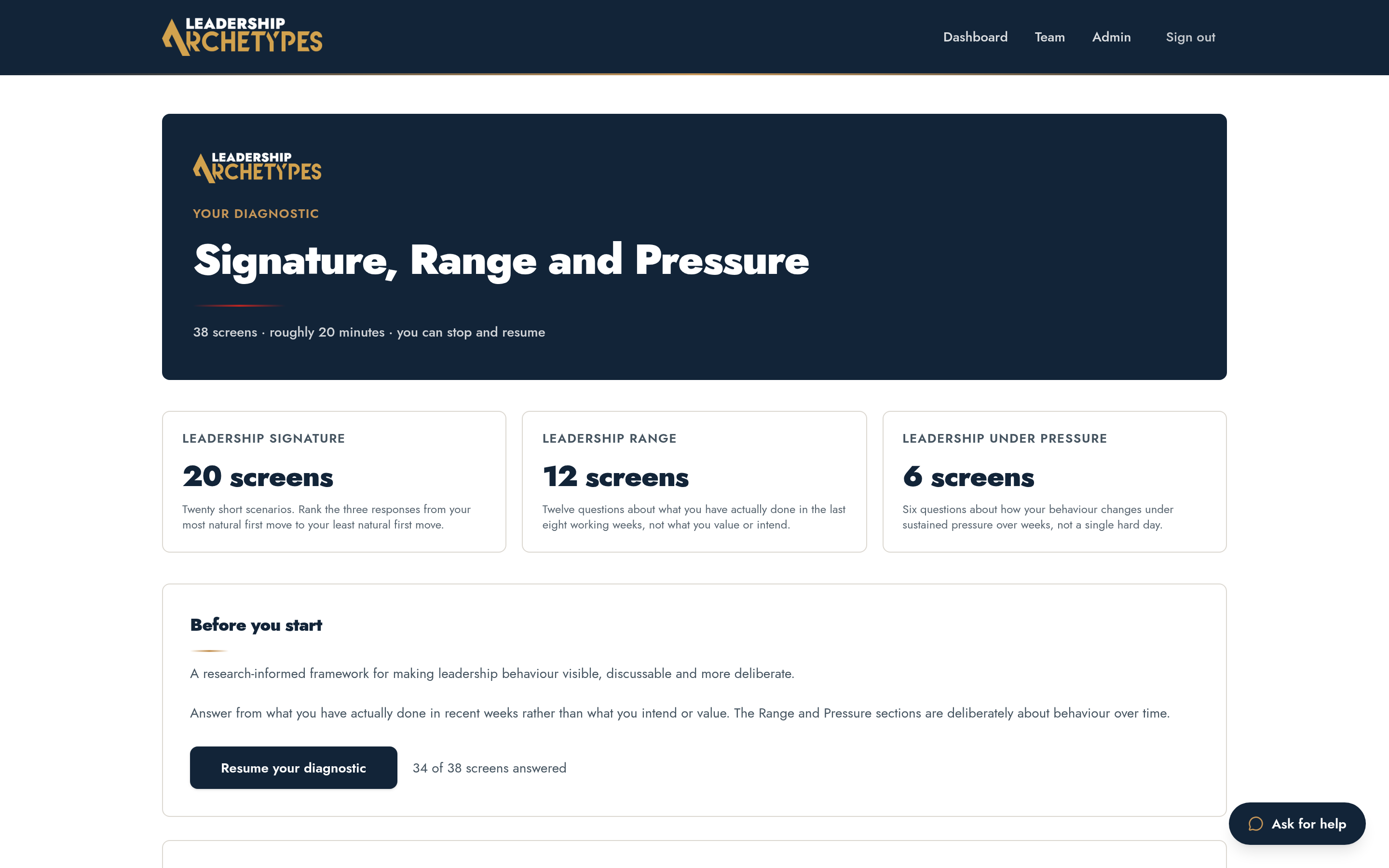
The diagnostic moves through sections, each with its own field treatment so you always know where you are. Part A asks what you reach for; Part B asks what you actually enacted, and what changed under pressure.
Allow 25 to 35 minutes of uninterrupted attention. Considered first responses are more useful than deliberated ones.
Answering well
- 1
Answer for the last three to six months of real work, not for the leader you intend to become.
- 2
Where a set asks you to rank, commit to an order even when the options feel close.
- 3
Move steadily. Section navigation lets you review a section before it is sealed.
Preference is not destiny. The instrument records orientation, not capability.
Stopping and resuming
Answers are saved as you go. Close the tab and your attempt waits for you; return from the dashboard and you land on the screen you left.
An attempt stays open until you submit it. Submission is what generates the interpretation.
Who sees your answers
Individual answers stay private. Facilitators and admins see whether you have completed, never what you selected. Team outputs are built from aggregate patterns.